
Building a comprehensive school mental health system requires more than a collection of programs and services. Strong leadership, strategic planning, and a commitment to continuous improvement are crucial to establish, and sustain, a school mental health system that supports all students’ needs. Yet many schools and districts lack dedicated opportunities to develop leaders who can guide this work.
The School Mental Health Leadership Institute (SMHLI) is designed to help school and district-based staff strengthen their ability to lead systems-level efforts that support student mental health. Grounded in the day-to-day realities of supporting students, participants will explore how to drive meaningful change within their schools and districts while building the structures, practices, and partnerships needed for a comprehensive school mental health system.
In this webinar series, participants will deepen their understanding of key components of effective school mental health systems, including needs assessment, student support teams, tiered interventions, data use, and continuous improvement. By the end of the webinar series, participants will have strengthened both their leadership skills and their capacity to advance comprehensive school mental health systems in their local context.
To receive PDPs and CEUs, participants must attend all 5 sessions, either live or via the recording, and successfully pass a quiz following Session 5. Within 24 hours of the live webinar, registrants will be emailed a link to view the recorded webinar. The recording will be made available for 7 days after each session. If you are not eligible for PDPs and/or CEUs, you may request a Certificate of Attendance.
Participants will be introduced to the foundations of school mental health leadership and explore how leaders can drive meaningful systems change within their schools and districts. Building upon a change management framework, participants will examine strategies for understanding current conditions, identifying priorities for improvement, and advancing long-term systems development. The session will focus on how leaders can assess the strengths and needs of existing mental health supports through needs assessments, resource mapping, and stakeholder feedback. Participants will also have opportunities for self-reflection, helping them identify leadership strengths, consider their approach to leading change, and explore how they can leverage their unique skills to advance comprehensive school mental health systems.
A strong Student Support Team (SST) is a cornerstone of an effective school mental health system. In this session, participants will examine how well-designed team structures can help schools coordinate supports, streamline decision-making, and respond more effectively to student needs. This session will explore strategies for establishing clear team roles and responsibilities, fostering collaboration across positions, and reducing duplication of efforts among existing teams. Participants will also learn approaches for building and maintaining staff commitment to student support efforts, assessing team effectiveness, and identifying opportunities for continuous improvement. Practical tools and examples will help participants strengthen the structures that support coordinated, schoolwide approaches to student wellbeing.
Comprehensive school mental health systems depend on tiered supports that are responsive to the diverse needs of students. This session will explore how mental health services fit within a Multi-Tiered System of Supports (MTSS) framework and how leaders can ensure interventions are selected, implemented, and monitored effectively. Participants will examine strategies for matching supports to student needs, advancing the use of evidence-based practices, and creating systems that enable interventions to be delivered consistently and effectively. The session will also address the role of supervision, treatment planning, and progress monitoring in maintaining high-quality services. Participants will leave with a deeper understanding of how to strengthen the infrastructure needed to support a continuum of mental health supports.
Data plays a critical role in building and improving school mental health systems. In this session, participants will explore how leaders can use data not only to evaluate outcomes, but also to guide decision-making, inform improvement efforts, and strengthen service delivery. Participants will learn about different types of data that can be used to understand the effectiveness of interventions and support measurement-based care. The session will also examine how disaggregated data can help identify disparities in access, participation, and outcomes across student groups. Through discussion and examples, participants will explore strategies for using data to uncover inequities, address disproportionality, and ensure that school mental health supports are accessible, responsive, and effective for all students.
Speakers
- John Crocker, M.Ed., Director of School Mental Health & Behavioral Services, Methuen Public Schools/Founder and Director, Massachusetts School Mental Health Consortium
- Amanda Chung, MPA, Senior Associate, Rennie Center for Education Research & Policy
About the Speakers
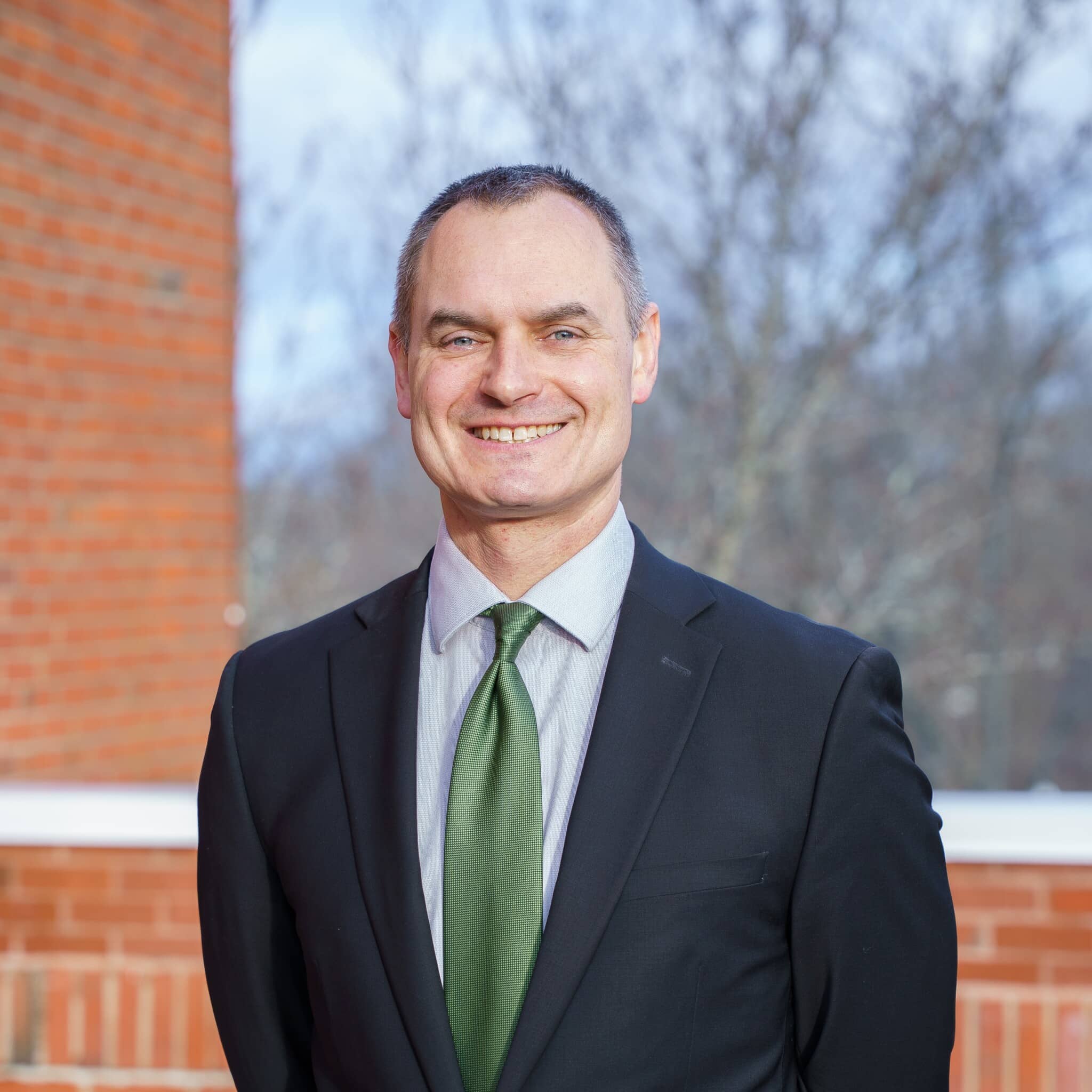
John Crocker, M.Ed.
John Crocker, M.Ed., (he/him) has worked in public education for fifteen years, primarily as the administrator for the Methuen Public Schools Counseling Department. He has overseen the planning and implementation of the “Mental Health Initiative,” which has focused on the establishment of a comprehensive school mental health system (CSMHS) in partnership with the National Center for School Mental Health (NCSMH). John has worked with the NCSMH as a member of the National School Mental Health Task Force and as the Massachusetts team leader for the National Coalition for the State Advancement of School Mental Health (NCSA-SMH). In his role as the Director of School Mental Health & Behavioral Services, he is charged with overseeing the district-wide implementation and evaluation of Methuen’s CSMHS and Positive Behavioral Interventions and Supports (PBIS). His work has focused on developing a district-wide system of universal mental health screening, advancing the use of psychosocial data to inform school mental health staff’s therapeutic practice, and the development and evaluation of the CSMHS in Methuen.

Amanda Chung, MPA
Amanda Chung (she/her) joined the Rennie Center shortly after receiving a Master’s in Public Affairs from the LBJ School at the University of Texas at Austin. Her desire to engage with K-12 education policy is largely inspired by her time as an AmeriCorps tutor at a middle school in Boston. Amanda’s fulfilling experience working with sixth grade students, combined with past volunteer involvement, contributed to her interest in education accessibility. Amanda’s work as an economic development consultant for rural universities reinforced the value of qualitative data and stakeholder engagement to better understand the needs of a community. An appreciation for community connection has been a key pillar in Amanda’s work history, as she has led outreach efforts for many private, public, and non-profit organizations. Before her Master’s program in Texas, Amanda received a B.A. from the University of California, Berkeley where she studied Political Science, Public Policy, and Journalism.
Membership Information
Most MPY webinars are available ONLY to current staff from member districts and organizations. Public school memberships include police and fire personnel. Former and retired employees and members of committees, including but not limited to, PTO/PTA, PAC, School Improvement Councils, Health Councils, Drug/Alcohol Councils, and school volunteers, are not considered MPY members.
PDPs and CEUs
MPY is an approved Professional Development Provider through the Massachusetts Department of Elementary & Secondary Education (Provider No. F20180079). Professional Development Points (PDPs) are offered for most MPY professional development webinars. PDPs are issued in 10 hour increments, per DESE requirements.
Continuing Education Units (CEUs) are available for clinical staff through the National Association of Social Workers (NASW) and the Massachusetts Mental Health Counselors Association, Inc. (MaMHCA). The NASW and the MaMHCA approve each event individually. CEUs may be given in hourly increments.
To receive PDPs and CEUs, participants must pass the quiz.
Event Cancellation Policy
If you are unable to attend a MPY webinar you must cancel, through Bonnie Mullen at bonnie@mpyinc.org, one business day before the webinar.
For MPY hybrid conferences, the date in-person registration closes will be posted on MPY’s website. Virtual conference registration will close one business day before the hybrid conference. You cannot cancel or switch your registration from in-person to virtual after in-person registration closes. Please email Bonnie Mullen with any questions regarding registration.