
In-Service Workshops

MPY is committed to bringing cutting-edge information and high-quality professional development to Massachusetts educators, students, and parents. Workshops are facilitated by experts recognized in the fields of education, psychology, social work, counseling, and student safety.

MPY partners with members to tailor workshops to meet the individual school’s unique and varied needs. Each member district/organization may select up to five in-service workshops annually. The following workshops are available for staff and parents. MPY does not offer PDPs and/or CEUs for in-service workshops.

For more information or to schedule workshops, please contact Prevention and Education Coordinator, Amy Welch at amy@mpyinc.org.

In-Service Workshops

The following workshops are available for staff, students and parents. Workshops are offered both in person and via Zoom. MPY requires a minimum of 25 participants for staff workshops and a minimum of 40 participants for parent and caregiver workshops. Exceptions are made on a case by case basis.

Filter by
Category
Featured image for Supporting Dysregulated Individuals: Practical Strategies for Regulation and Success

Supporting Dysregulated Individuals: Practical Strategies for Regulation and Success

This interactive workshop equips educators, school mental health professionals, and support staff with practical, relationship-based strategies for responding to dysregulated behavior in real time. Participants will explore the underlying causes of dysregulation, strengthen their understanding of co-regulation, examine the role of equity and context in behavioral responses, and leave with actionable tools to promote safety, consistency, and long-term skill development. This workshop emphasizes proactive prevention, effective de-escalation, and sustainable strategies that can be implemented immediately across school settings.
Social and Emotional Learning
Featured image for Joy and Agency: The Magic Spark of Play (In Person Only)

Joy and Agency: The Magic Spark of Play (In Person Only)

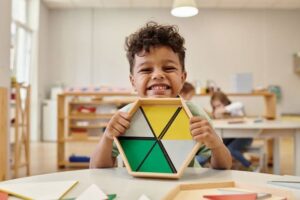
When children have a genuine say in how they play and learn, something remarkable happens — curiosity ignites, creativity flourishes, and engagement becomes effortless. This dynamic, hands-on workshop explores why joy and agency are not just feel-good additions to the classroom — they are the conditions under which young children learn best. Grounded in current research and the growing play-based learning movement, participants will discover how guided play strikes the perfect balance between child-led exploration and purposeful teaching. Leave inspired, energized, and equipped with practical strategies you can use immediately.

Ideal for educators in Pre-K through Grade 3.

Social and Emotional Learning
Featured image for Play to Learn: Unleashing the Power of Playful Pedagogy (In Person Only)

Play to Learn: Unleashing the Power of Playful Pedagogy (In Person Only)

In today's knowledge-rich, AI-driven world, the most future-ready classrooms aren't the most rigorous — they're the most joyful. This workshop empowers educators to harness playful learning as a research-backed teaching strategy that builds 21st-century skills while meeting academic goals. Discover how guided play develops confident, creative, collaborative thinkers — and rediscover your own joy in teaching.
Social and Emotional Learning
Featured image for The Importance of Play: Why Playful Learning is Crucial in Early Education (In Person Only)

The Importance of Play: Why Playful Learning is Crucial in Early Education (In Person Only)

"Play is nature's training for life." — Friedrich Froebel

Play is how young children explore, discover, and make sense of the world around them. For children in the early years, play is not a break from learning — it is the learning. It is how they connect with others, develop emotionally, feel safe, and experience a genuine sense of belonging.

In his landmark book The Anxious Generation, Jonathan Haidt makes a compelling case that the erosion of play-based childhood — driven by screens, mobile devices, and shifting societal norms — has had a profound impact on the well-being of today's youth. Current research affirms that free play, social play, imaginative play, and nature-based play are not enrichment extras — they are developmental necessities. Add the lasting emotional impact of the pandemic, and the urgency becomes clear: play is needed now more than ever.

Ideal for educators in Pre-K through Grade 3.

Social and Emotional Learning