
In-Service Workshops

MPY is committed to bringing cutting-edge information and high-quality professional development to Massachusetts educators, students, and parents. Workshops are facilitated by experts recognized in the fields of education, psychology, social work, counseling, and student safety.

MPY partners with members to tailor workshops to meet the individual school’s unique and varied needs. Each member district/organization may select up to five in-service workshops annually. The following workshops are available for staff and parents. MPY does not offer PDPs and/or CEUs for in-service workshops.

For more information or to schedule workshops, please contact Prevention and Education Coordinator, Amy Welch at amy@mpyinc.org.

In-Service Workshops

The following workshops are available for staff, students and parents. Workshops are offered both in person and via Zoom. MPY requires a minimum of 25 participants for staff workshops and a minimum of 40 participants for parent and caregiver workshops. Exceptions are made on a case by case basis.

Filter by
Category
Featured image for Supporting Student Success: Understanding the Transition from IEPs to College Disability Services (Evenings Only)

Supporting Student Success: Understanding the Transition from IEPs to College Disability Services (Evenings Only)

Transitioning from high school to college brings exciting opportunities—and important changes—for students with disabilities. This one-hour presentation will explore how disability services, supports, and student responsibilities shift in the college environment. Participants will learn the key differences between high school and college support as well as what those differences mean in practice for access, accommodations, and self-advocacy. Practical strategies to help students prepare for a successful transition as well as information on a range of college programs and supports will be discussed.
Education and the Law

Featured image for Team Building 101: Building Stronger Staff Connections

Team Building 101: Building Stronger Staff Connections

This professional development session is designed to strengthen collaboration, communication, and trust among staff members. “Team Building 101” provides a foundational look at what makes teams thrive in a school or organizational setting. Through interactive exercises, reflective discussions, and practical strategies, participants will explore team dynamics, clarify roles, and learn effective methods for conflict resolution and decision-making. Whether you're part of an administrative team, instructional staff, or support services, this session offers tools to enhance teamwork, boost morale, and create a more cohesive, supportive work environment. This workshop is for teachers, school administrators, or other school staff.
Fostering a Positive School Culture
Featured image for The Art of Supporting Our Students with Understanding and Compassion

The Art of Supporting Our Students with Understanding and Compassion

This interactive training will enhance staff's understanding of the reasons behind students' behavior and how they can help their students achieve their goals. The training will cover practical student support strategies that are proactive, compassionate, and student-centered and the importance of responding to behavior with consistency and predictability in the classroom. Participants will explore how to approach their work with a neurodiversity affirming approach and how to effectively flow through challenging situations. This workshop is offered as a single session, multiple sessions, half-day training, or full-day training.
Social and Emotional Learning
Featured image for The Awkward Zone

The Awkward Zone

This workshop helps each participant understand what barrier behaviors they have in their personal “Awkward Zone™” — that place of knowing a co-worker or employee is struggling but not knowing what to say or do.
Fostering a Positive School Culture
Featured image for The Brain on Social Media (Remote Only)

The Brain on Social Media (Remote Only)

Dive into the world of neuroscience and psychology as this workshop offers a deep dive into how the brain reacts to social media. Explore the relationship between the brain on social media and peer feedback, peer influence, human connection, sleep, and evolutionary psychology. Learn to identify certain signs of addiction in children and adolescents and analyze fMRI scans to see how the neurochemistry of the young and developing mind is changing because of digital overload. How can we replace the dopamine we receive from social media with other forms of dopamine? Is social media a drug? How does social media addiction compare to other forms of addiction such as alcohol and substance abuse? These are just some of the topics to be explored by this presentation by Keegan Lee, a psychology and neuroscience researcher at The University of North Carolina.
Parent Student Assemblies Technology and Social Media
Featured image for The Digital Well-being Playbook   (Remote Only)

The Digital Well-being Playbook (Remote Only)

Do your kids spend a lot of time on Tiktok, YouTube, or playing Fortnite? Do you as parents struggle to understand everything that is going on in their online lives? You may also be wondering how your own relationship with technology might be healthier. You’re in the right place! Coming out of the pandemic, many of us have spent more time on screens than ever before, and the lines between home, work, and school are blurry, making it challenging to unplug from our devices. Join us as we discuss navigating this balance with tips and tools to: • Achieve sustainable, positive digital practices with family and at work. • Optimize your digital habits for better mental health and family connection. • Prevent and recover from sensory overload and digital overwhelm. • Positively shift your relationship with your devices so they fuel vs. fatigue your relationships.
Technology and Social Media
Featured image for The Importance of Play: Why Playful Learning is Crucial in Early Education (In Person Only)

The Importance of Play: Why Playful Learning is Crucial in Early Education (In Person Only)

"Play is nature's training for life." — Friedrich Froebel

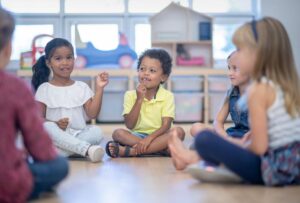
Play is how young children explore, discover, and make sense of the world around them. For children in the early years, play is not a break from learning — it is the learning. It is how they connect with others, develop emotionally, feel safe, and experience a genuine sense of belonging.

In his landmark book The Anxious Generation, Jonathan Haidt makes a compelling case that the erosion of play-based childhood — driven by screens, mobile devices, and shifting societal norms — has had a profound impact on the well-being of today's youth. Current research affirms that free play, social play, imaginative play, and nature-based play are not enrichment extras — they are developmental necessities. Add the lasting emotional impact of the pandemic, and the urgency becomes clear: play is needed now more than ever.

Ideal for educators in Pre-K through Grade 3.

Social and Emotional Learning
Featured image for The Power of Play! (Remote Only)

The Power of Play! (Remote Only)

Research shows that there is real power in play. Through play, children develop the social, emotional, cognitive, and physical skills they need to thrive both now and into their futures. Play is both fun and a vital way that children learn about themselves and the world around them. This workshop is recommended for Preschool through Grade 2 staff.
Social and Emotional Learning
Featured image for The Role of Neuropsychological Assessments in Understanding Student Learning and Behavior (Remote Only)

The Role of Neuropsychological Assessments in Understanding Student Learning and Behavior (Remote Only)

Designed for school psychologists, social workers, guidance counselors, nurses, and special education staff, this workshop will discuss identifying a student's strengths and challenges using neuropsychological testing. Participants will learn how to examine neuropsychological tests, how they are used, and how to develop instructional and behavioral strategies for students based on these assessments.
Mental and Behavioral Health
Featured image for The Role of the School Nurse in Supporting Students with Mental Health Disorders

The Role of the School Nurse in Supporting Students with Mental Health Disorders

School nurses provide support and advocacy to students with mental health issues daily and are often the first school professional to recognize the signs and symptoms of a mental health disorder. This workshop will provide school nurses with an update on the most commonly encountered mental health disorders including anxiety, depression, and PTSD and strengthen their skills for managing students’ symptoms of these disorders in the health office. Participants will build on their collaborative and communication skills with school-based student support personnel, including in the context of 504 plans, IEPs, and IHPs, as well as caregivers, and community-based providers.
Mental and Behavioral Health
Featured image for The Story of Your Name (Remote Only)

The Story of Your Name (Remote Only)

Perhaps the most important part of a person’s identity is their name and the story behind it. Pronouncing one’s name correctly (by practicing it when necessary) is an authentic connection with both students and adults. In my experience, when learning, using and sharing the story of their name, students and teachers are afforded the opportunity to be in a learning community that is welcoming and supportive of the academic achievement and success of the entire community.

Through this interactive session, attendees will work toward the following outcomes:

  • Practice and bring to life the Peace and Justice Institute Principles of “How We Treat Each Other” to promote an equitable, welcoming and inclusive community.
  • Develop trust and sensitivity among people who might otherwise not interact with one another.
  • Use authentic storytelling to build bridges between different groups, and identify ways to be “allies” so as not to collude through silence.
  • Identify specific action steps and realistic goals going forward.

Fostering a Positive School Culture
Featured image for Think Before You Send: Preventing Teen Sexting

Think Before You Send: Preventing Teen Sexting

This presentation educates students on the risks, consequences, and realities of sexting in today’s digital world. Students will learn about the emotional, legal, and social impacts of sharing explicit images, even among peers. Through real-life scenarios, interactive discussions, and current data, the session empowers students to make responsible choices, understand consent, protect their digital reputation, and seek help when needed. The goal is to build awareness, promote healthy communication, and reinforce the importance of respecting boundaries—both online and offline.
Student Assemblies Technology and Social Media
Featured image for Thriving in the Age of Digital Distraction (Remote Only)

Thriving in the Age of Digital Distraction (Remote Only)

In today’s world, 24/7 connectivity contributes to digital distraction and phone dependence, which may hinder students' physical, mental, and emotional health. Social media platforms can foster a culture of peer comparison. How do we all shift from digital overload to more tech/life balance? Students will learn the data and be introduced to the LookUp Challenge: a student-led initiative to take a break from phones, social media and technology for a week as a school community on each students' own terms.
Student Assemblies
Featured image for Underage Substance Use: Culture Shock

Underage Substance Use: Culture Shock

This eye-opening presentation explores the evolving landscape of underage substance use, highlighting the cultural, social, and media-driven influences that shape youth behaviors and attitudes. “Culture Shock” delves into how music, social media, peer pressure, and shifting societal norms contribute to the normalization of alcohol, vaping, marijuana, and other substances among teens. Participants will learn about current trends, the risks associated with early substance use, and the disconnect between perception and reality. The session also equips students and staff with strategies to promote healthy decision-making, foster resilience, and create a school culture that challenges harmful norms and supports prevention.
Student Assemblies Underage Substance Abuse
Featured image for Understanding and Responding to Cultural Influences in Early Childhood Education (Remote Only)

Understanding and Responding to Cultural Influences in Early Childhood Education (Remote Only)

This professional development workshop supports teachers of young children in examining how culture shapes development, learning, and classroom interactions. Participants explore the meaning of culture in early childhood education classrooms and reflect on how children’s identities, family experiences, and community values influence the way they learn and express themselves. This workshop is intended for PreK - Gr. 2 staff.
Social and Emotional Learning